Patios that stay comfortable into late October, facades that photograph well enough to do your marketing for you, and scene changes for every event on the calendar — without anyone from your team touching a ladder.
Reply within 1 business day
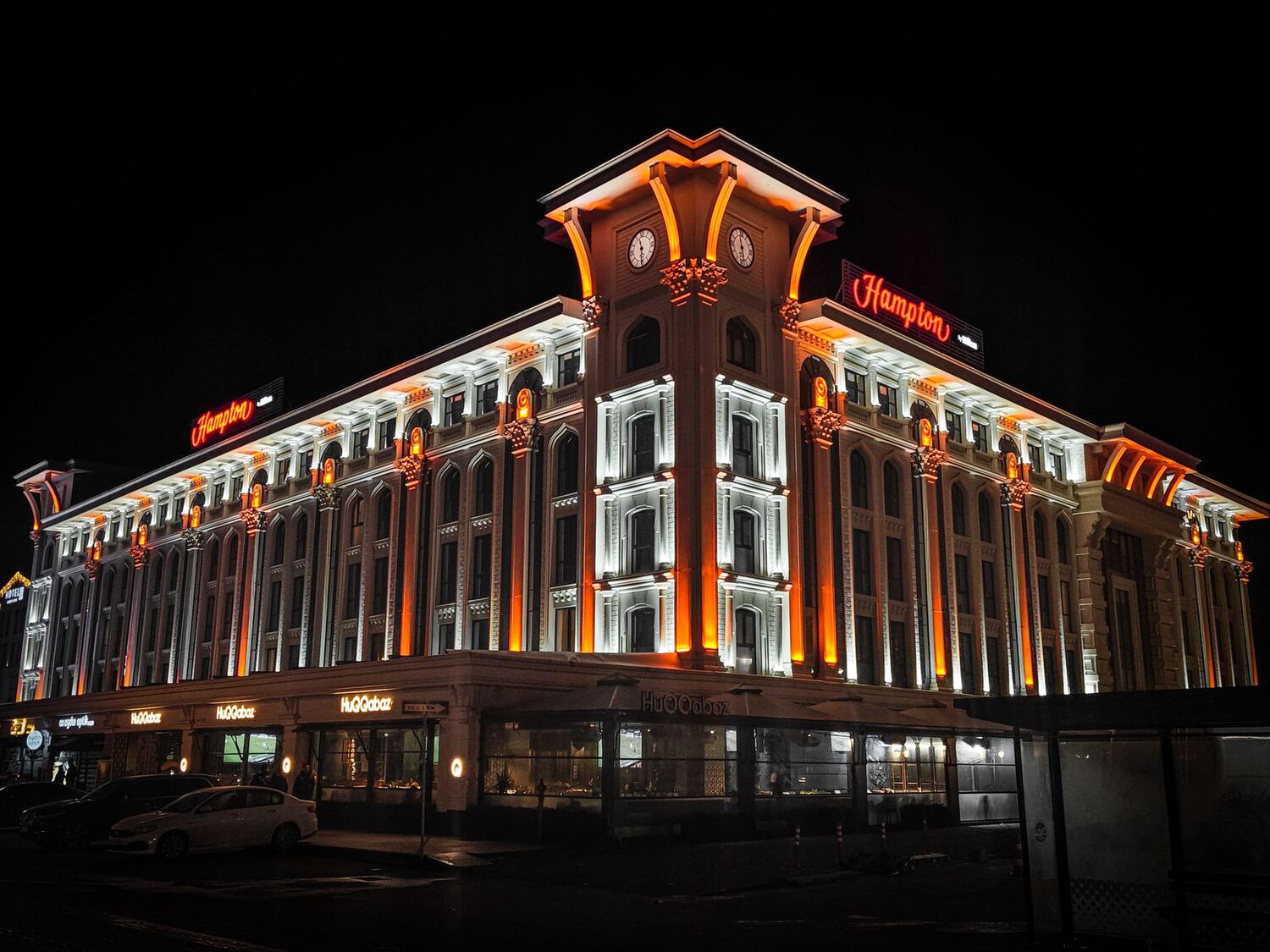
Every other kind of commercial lighting is about visibility. Hospitality lighting is about how the room feels and how the guests in it look — a much harder problem and a much more valuable one to get right.
The rules are unforgiving. Warm — 2200K to 2700K, never higher on a patio. Low and from multiple directions, because a single overhead source puts shadows under everyone's eyes. High CRI, because food photographed under bad light looks inedible and your guests are all photographers now. And dimmable on a curve that tracks the evening, so 6pm and 10pm do not look the same.
Get it right and the effect on dwell time is not subtle. People stay for another round in a space that feels good after dark, and they post pictures of it, which is marketing you do not pay for.
Catenary runs, perimeter rail lighting and heater-integrated fixtures that make a patio usable weeks longer at both ends of the season.
The building lit properly, the entrance obvious from the street, and the valet or drop-off zone safely bright.
Dedicated runs on canopies, awnings and sign bands so your name reads from across the street.
Uplighting, planting and path lighting for the outdoor spaces guests actually walk through at night.
Preset looks for weddings, holiday parties and conferences — your events team switches them in the app, no vendor call needed.
Hotel pool decks and water features lit to wet-location code and tied into the same control system.
We come while you are open, look at the space in use, and see where the light currently fails your guests.
On larger projects we hang a temporary mock-up so your team can see the actual colour temperature before committing to it.
Overnight or on your closed day — patios are usually one to two nights — then a locked scene set and a one-pager for your managers.
Yes — nearly all of our hospitality work happens overnight or on a scheduled closed day. We plan around your service, not the other way round, and we clean the space to opening standard before we leave.
It depends on the size of the patio, what structure is already there, and whether there is anything overhead to attach catenary to. Full facade and entry lighting on a hotel is a larger project again. Every hospitality job is quoted per site after we have walked it.
That is the argument for it. People stop sitting outside in late September less because of temperature than because the space stops feeling good once it is dark at 7pm. A properly lit patio stays full into October and reopens in April instead of May — four to six extra weeks of covers, which usually pays for the install in one season.
It is a constraint, not a problem. Heritage properties need non-destructive mounting — clamps, standoffs and existing fastener locations — and sometimes a heritage permit. We have done it and we will tell you upfront what the approval path looks like for your address.
We will come by on a busy evening, see how the space actually performs, and quote from there.